Win and Place Bet Horse Racing UK: Payouts & Strategies
 Available in US
Table of Contents
- Place Betting Horse Racing Cheat Sheet UK
- What Win and Place Bets Really Mean for UK Punters
- How Place Bets Work in British Racing
- Each-Way Betting: The UK’s Signature Wager
- Place Bet Payout Maths: 1/4 Odds vs 1/5 Odds
- Win Bet vs Place Bet: When Each Makes Sense
- Where UK Punters Place Their Bets Today
- Place Betting Strategy at a Glance
- The UK Horse Racing Betting Market in Numbers
- Responsible Place Betting: Staying in Control
- Frequently Asked Questions
- Sources
Place Betting Horse Racing Cheat Sheet UK
- Place bets pay out if your horse finishes in the top 2, 3, or 4 positions — the exact number depends on field size and race type, with handicaps of 16+ runners paying four places at 1/4 odds.
- Each-way bets are two bets in one (win + place) at equal stakes, making up 22% of all UK horse racing wagers. A 10-pound each-way bet costs 20 pounds total.
- The place fraction — 1/4 vs 1/5 of the win odds — changes your return by up to 25%. Handicap races and small fields use 1/4; non-handicap races with 8+ runners use 1/5.
- Remote horse racing betting generated 766.7 million pounds in GGY in 2024/25, with over 80% of Cheltenham Festival bets placed on mobile.
- Place betting rewards selectivity: filter by field size, check terms before every bet, and track net results over months rather than individual outcomes.
What Win and Place Bets Really Mean for UK Punters
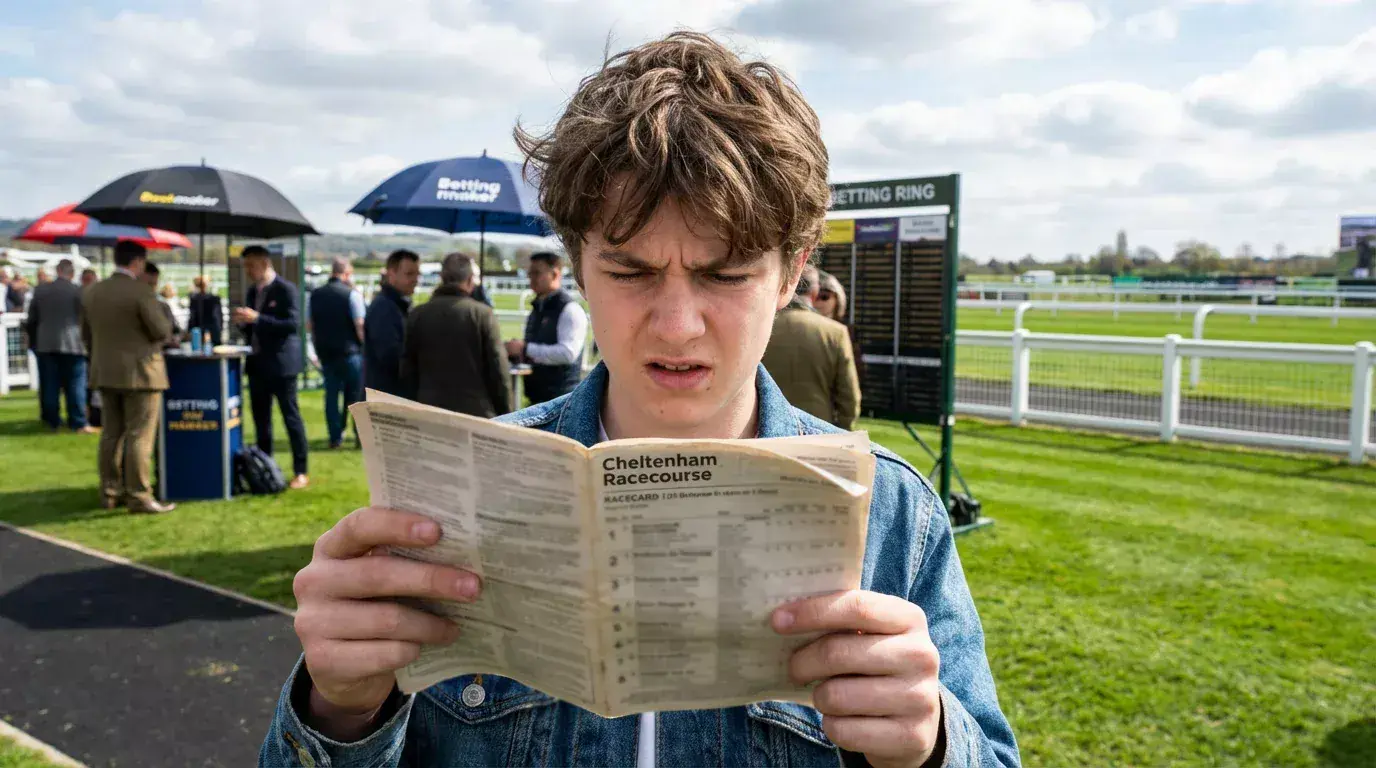
I watched a bloke at Cheltenham in 2019 tear up his betting slip after his horse crossed the line in third. He had backed it to win at 14/1 — a decent pick, honestly — but he had no idea he could have had a place bet running alongside it. That slip could have paid out. Instead, it ended up in a puddle by the Guinness tent. I think about him every March, because his mistake is still one of the most common I see in UK racing.
Win bets and place bets sit at the foundation of every wager you will ever make on a horse race in Britain. A win bet does exactly what the name suggests — your horse must finish first, or you lose your stake. A place bet loosens that requirement: your horse needs to finish in one of the designated “places” (typically first, second, or third, depending on the field size and race type), and you collect a payout at reduced odds.
Win bet — a wager that pays out only if the selected horse finishes first. The simplest, highest-risk, highest-reward bet in racing.
Place bet — a wager that pays out if the selected horse finishes within a set number of positions (usually 1st, 2nd, or 3rd). Lower odds, but a wider margin for success.
These two bet types are not relics of some bygone era. Win bets account for 36% of all horse racing wagers in the UK, while each-way bets — which bundle a win bet with a place bet — make up another 22%. Together, they dominate the market. Racing and betting in the UK share a connection stretching back over two centuries — as the European Commission once put it, a day at the races includes, for most participants, betting on horse races as well.
This guide covers the full picture for UK punters: how place bets work under British rules, what each-way really means in practice, the payout maths you need before placing a single pound, and the strategic thinking that separates punters who grind out returns from those tearing up slips at Cheltenham. I have spent nine years analysing these markets, and everything here is built on what I have seen work — and fail — across thousands of races on British turf and all-weather tracks.
How Place Bets Work in British Racing
The first time I tried to explain place betting to a friend who only followed football, I said: “Imagine if you got paid out for a draw as well as a win.” He got it immediately. That is the core appeal — place betting gives you more ways to collect, in exchange for accepting a smaller payout. But the mechanics in British racing are more precise than most people realise, and those details make a real difference to your returns.
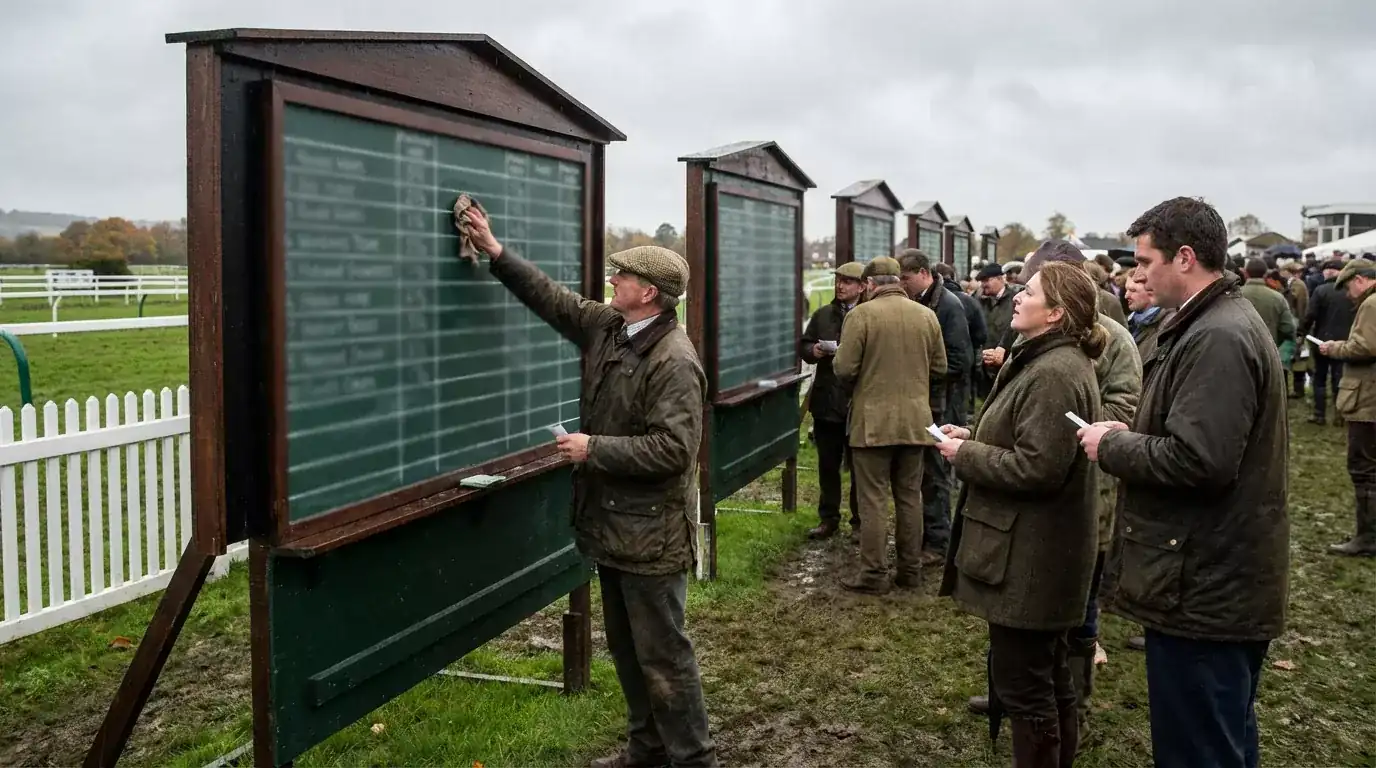
In the UK, a “place” is not a vague concept. The number of paid places in any race is determined by strict rules tied to the number of runners and the race type. These rules are set before the off and displayed by every licensed bookmaker, whether you are betting on a mobile app or at a racecourse stall.
When you back a horse to place, you are betting that it finishes within a defined set of positions. In a standard race with eight or more runners, the place positions are 1st, 2nd, and 3rd. Your horse does not need to win — it just needs to land in one of those spots. The payout comes at a fraction of the win odds, typically one quarter or one fifth, depending on the race conditions. One of the appeals of horseracing betting, as the British Horseracing Authority has noted, is that it can almost be considered a skill and is enjoyed by many as an intellectual challenge — and understanding place mechanics is where that skill begins.
The sheer volume of money flowing through place-related markets — standalone place bets, each-way wagers, and exchange place trading — makes this far more than a sideshow. Place betting is a structural pillar of UK racing revenue, and the mechanics governing it directly affect what ends up in your pocket.
Here is the critical distinction from American racing: in the US, “place” means second only, and “show” means third. In Britain, “place” covers all paid finishing positions — which could be two, three, or four places depending on the race. If you have ever read a US betting guide and felt confused, that is why. The terminology split trips up cross-border punters constantly, and I cover the full breakdown in my comparison of win bets versus place bets.
Standard UK Place Terms by Number of Runners
Place terms are the rules that determine how many finishing positions count as a “place” and what fraction of the win odds the place pays. These terms vary by field size and race type, and they directly control how much you get back on any place-related bet.
UK Standard Place Terms
The table below shows the default terms applied by UK bookmakers. Individual firms may offer enhanced terms as promotions, but these are the baselines you can rely on.
| Number of Runners | Places Paid | Place Odds Fraction | Race Type |
|---|---|---|---|
| 1-4 runners | Win only (no place) | N/A | All |
| 5-7 runners | 1st, 2nd | 1/4 of win odds | All |
| 8-15 runners | 1st, 2nd, 3rd | 1/5 of win odds | Non-handicap |
| 8-15 runners | 1st, 2nd, 3rd | 1/4 of win odds | Handicap |
| 16+ runners | 1st, 2nd, 3rd, 4th | 1/4 of win odds | Handicap |
The jump from two places to three happens at eight runners, and the jump from three to four happens at sixteen runners in handicap races. These thresholds are not arbitrary — they reflect the probability distribution in different field sizes. A four-runner race is tight enough that backing a horse to “place” would essentially be backing a coin flip, which is why bookmakers revert to win-only terms. Once you hit five runners, the probability of finishing in the top two becomes meaningfully different from winning, and the place bet starts to have its own distinct value.
For a deeper dive into every edge case — walkovers, late withdrawals that drop the field below a threshold, and the difference between handicap and non-handicap terms — I have a full reference on UK place terms in horse racing.
Each-Way Betting: The UK’s Signature Wager
Ask a casual racing fan what bet they placed at the Grand National and the answer is almost always the same: “A fiver each way.” Each-way is the default wager at UK racecourses, the bet that people place when they want skin in the game without the all-or-nothing pressure of a win bet. At the 2024 Cheltenham Festival, each-way wagers surged 25% across the four days — a spike that tells you everything about how central this bet type is to the festival experience.
Each-way bet — a single wager that is actually two bets in one: a win bet and a place bet, at equal stakes. If you put 5 pounds each way, your total outlay is 10 pounds — 5 pounds on the horse to win and 5 pounds on the horse to place.
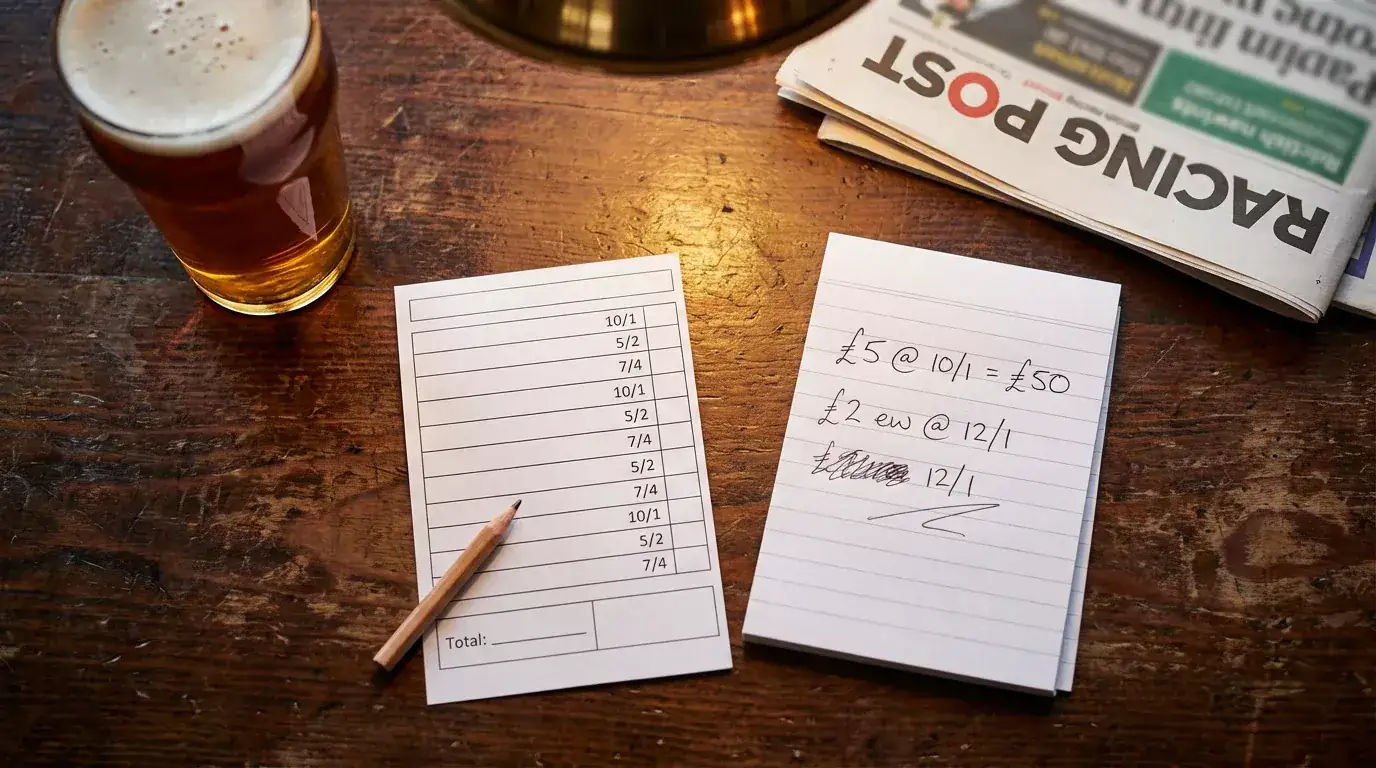
Each-Way Bet Breakdown: 5 pounds each way on a 10/1 shot
Total stake: 10 pounds (5 pounds win + 5 pounds place)
If the horse wins: Win part pays 10/1 x 5 pounds = 50 pounds profit + 5 pounds stake. Place part pays at 1/4 of 10/1 = 5/2, so 5/2 x 5 pounds = 12.50 pounds profit + 5 pounds stake. Total return: 72.50 pounds.
If the horse places but does not win: Win part loses 5 pounds. Place part pays 5/2 x 5 pounds = 12.50 pounds profit + 5 pounds stake = 17.50 pounds. Net result: +7.50 pounds (17.50 pounds minus 10 pounds total stake).
If the horse finishes outside the places: Both parts lose. Total loss: 10 pounds.
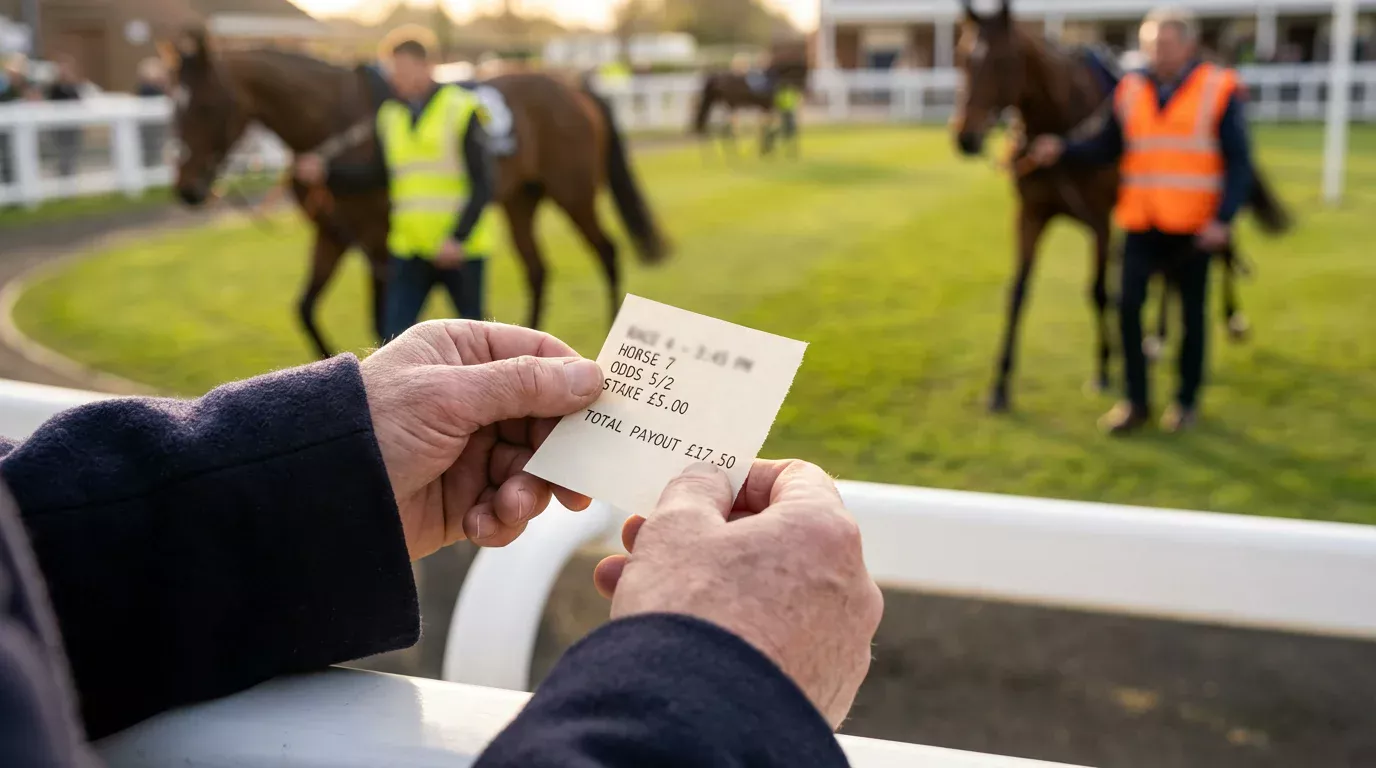
The structure is straightforward once you see it laid out, but the double-stake element catches beginners every single time. I cannot count how many messages I have received from new punters who placed “10 pounds each way” expecting to spend 10 pounds, then found 20 pounds debited from their account. Each-way means each way — one stake for the win, one stake for the place.
Each-way is the second most popular bet type in British racing after the straight win bet, and for good reason: it offers a built-in hedge. You are paying for the privilege of collecting on a near-miss, and at longer odds, that hedge can be genuinely profitable even when the horse does not win. The place part of an each-way bet on a 20/1 shot at quarter-the-odds pays 5/1 — a return that covers your entire outlay and then some, without the horse needing to cross the line first.
The detailed mechanics of each-way settlement, including how multiples and accumulators work, deserve their own space. I have written a full walkthrough of how each-way betting works that takes you from the basics through to each-way doubles and trebles.
Understanding how each-way works is one thing. Knowing what the place part actually pays you — and why 1/4 odds and 1/5 odds produce very different returns — is where the real edge starts.
Place Bet Payout Maths: 1/4 Odds vs 1/5 Odds
Here is a question I ask every new punter I mentor: “Your horse is 8/1 in a twelve-runner handicap. What does the place part pay?” Most guess wrong. Some say 2/1. Some say 8/1 divided by three. The correct answer is 2/1 — but only because it is a handicap, which pays at 1/4 of the win odds. If the same race were a non-handicap, the place fraction drops to 1/5, and the payout becomes 8/5 instead. That single fraction difference — 1/4 versus 1/5 — changes your profit by 25% on the place leg. It is not a minor detail.
Worked Example: 8/1 horse, 5 pounds place stake
Step 1: Determine the place fraction. Handicap race with 12 runners = 1/4 of win odds.
Step 2: Calculate place odds. 8/1 x 1/4 = 8/4 = 2/1.
Step 3: Calculate place return. 2/1 x 5 pounds = 10 pounds profit + 5 pounds stake = 15 pounds total return.
Step 4: Compare with non-handicap. 8/1 x 1/5 = 8/5. Return = 8/5 x 5 pounds = 8 pounds profit + 5 pounds stake = 13 pounds total return.
Difference: 2 pounds per 5-pound stake. Scale that to a 50-pound stake and the gap is 20 pounds.
The 1/4 fraction applies to all handicap races and to non-handicap races with five to seven runners. The 1/5 fraction kicks in for non-handicap races with eight or more runners. Why the distinction? Handicaps tend to have larger, more competitive fields where finishing in the places is harder, so bookmakers offer a more generous fraction to compensate. The bookmaker’s margin on place markets tends to run higher than on win markets — meaning their cut on your place bet is larger than on your win bet. Knowing the fraction helps you judge whether the place odds actually represent value or just the bookmaker’s generosity theatre.
Quick Reference: Place Payouts at Common Odds
| Win Odds | Place at 1/4 | Place at 1/5 |
|---|---|---|
| 4/1 | 1/1 (Evens) | 4/5 |
| 8/1 | 2/1 | 8/5 |
| 10/1 | 5/2 | 2/1 |
| 16/1 | 4/1 | 16/5 |
| 20/1 | 5/1 | 4/1 |
| 33/1 | 33/4 | 33/5 |
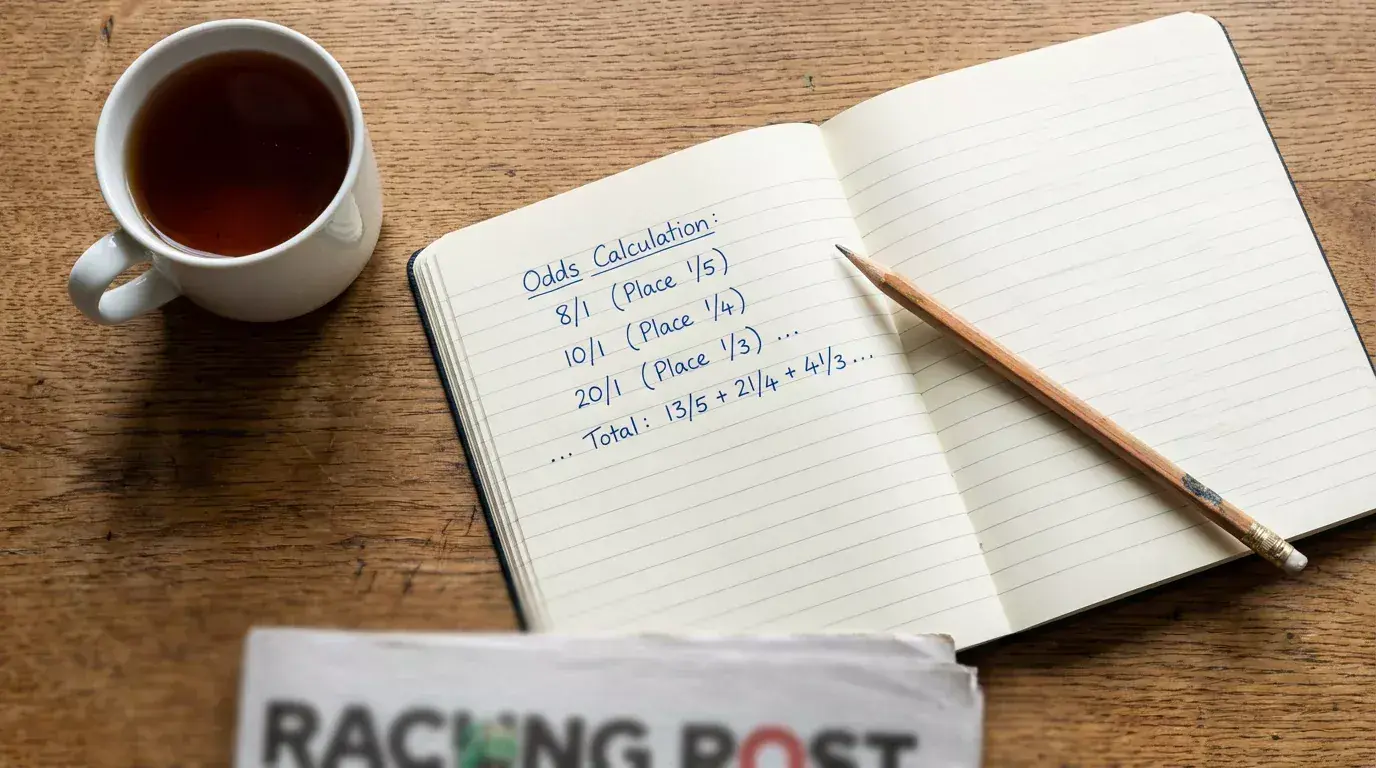
Notice how at shorter odds the gap narrows, but at longer odds the 1/4 fraction pulls significantly ahead. A 20/1 shot at quarter-the-odds gives you 5/1 on the place part — a 5-pound stake returns 30 pounds. At one-fifth, the same horse returns 25 pounds. That 5-pound difference multiplied across a season of bets adds up to serious money.
The payout formula itself is simple: take the win odds, multiply by the place fraction, and apply to your stake. But the real-world wrinkle is that many punters never check which fraction applies before tapping “Place Bet” on their phone. I have a detailed guide to calculating place bet and each-way returns with four worked examples at different odds levels, including the exact break-even points where the place payout covers your total each-way outlay.
Win Bet vs Place Bet: When Each Makes Sense
A punter I know exclusively bets to win. Never touches each-way, never takes a place bet. His reasoning: “If I think a horse is good enough to back, I think it is good enough to win.” There is a logic to that — but it ignores what the data actually says about strike rates. Even the market favourite loses roughly two out of every three races in British racing. The question is not whether your horse can win. The question is whether the odds and your bankroll can absorb that loss rate.
| Factor | Win Bet | Place Bet |
|---|---|---|
| Payout potential | Full win odds | Fraction of win odds (1/4 or 1/5) |
| Strike rate (typical favourite) | 30-35% | 60-70% (estimated place rate) |
| Risk level | Higher — single outcome required | Lower — multiple positions qualify |
| Best suited for | Strong opinions at value odds | Competitive fields, uncertain outcomes |
| Bankroll impact | Higher variance, longer losing runs | Smoother returns, smaller peaks |
Win betting rewards conviction. If you have done your homework and you believe a horse is underpriced — say, a 6/1 shot that you assess as closer to a 3/1 chance — a win bet captures the full value of that edge. Place betting dilutes it. You are giving up upside in exchange for safety you might not need.
But here is the flip side. In large-field handicaps with sixteen or more runners, the place market pays four positions at 1/4 odds. A 14/1 outsider has to beat just twelve horses to place (finishing in the top four out of sixteen or more), while it needs to beat all fifteen-plus to win. The probability shift is enormous, and the place fraction is generous enough to produce genuinely profitable returns over time. This is where place betting and each-way strategies earn their keep.
Do
- Back to win when you have a strong view on a horse at value odds in a small field.
- Bet each-way in large-field handicaps where the place terms are generous and finishing positions are hard to predict.
- Check the place terms before choosing between win-only and each-way — they change the maths entirely.
Don’t
- Default to each-way on every bet without considering the odds — short-priced favourites produce tiny place returns that rarely justify the doubled stake.
- Bet to win at long odds in a big field without at least considering the each-way safety net.
- Assume a place bet is “always safer” — if your horse is odds-on, the place part often pays less than your stake back.
The decision between win and place is not philosophical — it is mathematical. It depends on the odds, the field size, the place terms, and your honest assessment of the horse’s chance. I have mapped out five specific race-day scenarios with the better bet for each, if you want a framework to take to the track.
Where UK Punters Place Their Bets Today
More than 80% of bets at the 2024 Cheltenham Festival were placed via mobile. The racecourse betting ring, with its colourful boards and shouting bookmakers, is still alive — but the smartphone has become the betting slip of choice for the vast majority of UK racing punters.
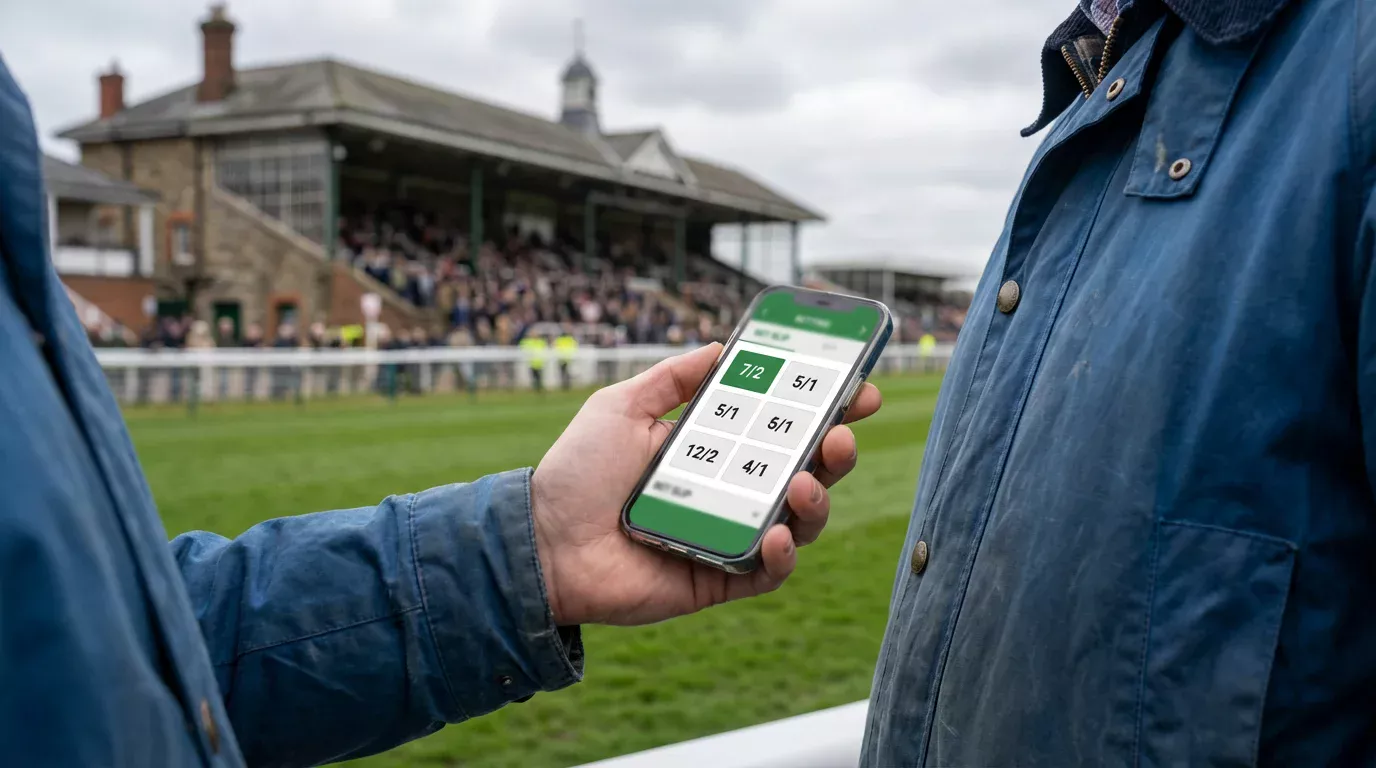
Nine years ago, when I started analysing place markets seriously, I would walk through the betting ring at Newbury with a notebook, comparing board prices to what the exchanges showed. Today I do the same thing from my sofa, flipping between three apps in under a minute. The shift to mobile is not just a convenience story — it has fundamentally changed how place bets work in practice. Apps display each-way place terms alongside the odds, offer one-tap each-way selection, and let you compare multiple firms’ terms before committing. That transparency did not exist when betting was dominated by high-street shops.
UK racecourse attendance topped 5.031 million in 2025 — the first time the figure exceeded 5 million since 2019. The BHA has said that racing continues to provide pleasure at all levels, and the attendance figures back that up. But the on-course experience now coexists with an enormous online market, and the record Levy yields of recent years have been driven overwhelmingly by remote betting activity rather than high-street shops or racecourse bookmakers.
Best Odds Guaranteed is a standard feature offered by most major UK bookmakers. If you take an early price on a horse and the starting price (SP) turns out to be higher, the bookmaker pays you at the better odds. BOG typically applies to both the win and place parts of an each-way bet, though restrictions vary. It is one of the most valuable tools for place bettors who like to take prices early in the morning when the market is still forming.
The landscape breaks down into three channels. Fixed-odds bookmakers — the firms you see advertised during every ITV Racing broadcast — handle the bulk of win and each-way bets. Betting exchanges let you back or lay horses to place at odds determined by other punters, often with a lower margin. And the Tote (pool betting) offers its own place market where dividends are calculated from the total pool after a deduction, producing payouts that sometimes beat fixed odds, particularly when a less-fancied horse fills a place. Each channel has a different margin structure, and understanding which one suits your betting style is part of the long-term game.
What matters for place bettors specifically is the variation in terms between firms. During major festivals, bookmakers compete aggressively on extra places — offering to pay four, five, or even six places on a race that would normally pay three. These promotions can flip the expected value of an each-way bet from negative to positive, and I track them closely throughout the Cheltenham and Royal Ascot weeks.
Place Betting Strategy at a Glance
I lost money on place bets for the first two years I took them seriously. Not because place betting does not work, but because I treated every race the same — staking the same amount, ignoring field sizes, and never checking whether the place fraction was 1/4 or 1/5. The moment I started filtering races by field size and matching my approach to the conditions, the numbers turned around. Strategy in place betting is not about finding secret winners. It is about filtering the conditions that give you an edge and ignoring the rest.
Favourites win roughly 30-35% of the time across British racing, but they place significantly more often — somewhere around 60-70% depending on the race type and field size. That gap between win rate and place rate is the structural opportunity that place bettors exploit. The problem is that bookmakers know this too, and they compress place odds accordingly. A typical bookmaker overround on the place market sits higher than on the win market, sometimes significantly so. Betfair Exchange back markets typically settle near 101-102%, while bookmaker overrounds for an average race run between 110% and 125%. On place markets, the bookmaker’s margin can be wider still — which means you need to be selective about where you bet and at what price.
Place betting is a discipline game, not a prediction game. The punters who profit over a full season are the ones who say “no” to ninety races for every ten they bet on. If you cannot walk away from a race where the terms do not suit you, the strategy will not save you.
Pre-Place-Bet Checklist
- Check the number of runners and confirm the place terms (2, 3, or 4 places).
- Identify the place fraction: 1/4 (handicaps, small fields) or 1/5 (non-handicaps, 8+ runners).
- Calculate the place payout and check whether it covers your total each-way outlay if the horse places but does not win.
- Compare terms across at least two bookmakers — look for extra-places promotions during festivals.
- Assess field competitiveness: large, open handicaps with no standout favourite favour each-way approaches.
- Set your stake relative to the place payout, not the win payout. The place leg is your realistic return in most scenarios.
Beyond the checklist, two strategic approaches dominate serious place betting in the UK. The first is the “each-way thief” method — backing outsiders at long odds in big-field handicaps, where the place part alone can produce substantial returns even if the horse never threatens to win. A 25/1 shot at 1/4 odds pays 25/4 on the place — over six to one on your place stake. The second is the favourite-to-place approach, which targets short-priced horses in competitive fields where the win is uncertain but the place is near-guaranteed, grinding out small, consistent returns. Both approaches require rigour, and I break them down in detail in my guide to place betting strategy for UK horse racing.
The UK Horse Racing Betting Market in Numbers
Numbers tell you things that opinions cannot. When someone says “racing is in decline,” I pull up the actual figures — because the picture is more complicated than any headline suggests, and your approach to place betting should be informed by the market you are operating in, not by sentiment.
Remote betting on horse racing generated 766.7 million pounds in gross gambling yield for licensed operators in the year ending March 2025. That is a substantial figure, but it sits within a broader context of falling turnover. Total betting turnover on British racing dropped 9% in Q1 2025 compared to the same period in 2024, and year-to-date through Q3 2025, total turnover fell 4.2% compared to 2024 and 12.8% compared to 2023. Richard Wayman, the BHA’s Director of Racing, acknowledged the concerning decline while noting that a wider range of factors beyond the racing product itself are contributing to the fall. The trend is clear: people are still betting on racing in enormous volumes, but the growth years are behind us for now.
The horse racing industry supports over 20,000 direct jobs across 59 licensed racecourses in Britain, generating approximately 4.1 billion pounds in total economic activity annually. When you place a bet on a Saturday afternoon handicap, you are participating in an economic ecosystem that stretches from stud farms in Newmarket to groundskeepers at Wetherby.
The Horserace Betting Levy Board collected a record 108.9 million pounds for 2024/25, up from 105.3 million the previous year. Anne Lambert, the HBLB’s Interim Chair, was direct about the challenge ahead: racing is facing significant challenges. For 2026, HBLB allocated 77.1 million pounds in prize money contributions, plus 20.1 million for regulatory and integrity services — funding that flows directly from bettors’ stakes through the Levy mechanism. Every licensed pound wagered on a horse in the UK feeds back into the sport.
Market segmentation tells you where the money goes. Win bets lead with 36% share, each-way accounts for 22%, single bets 15%, multiples 10%, and forecast/tricast combinations make up the remaining 17%. The each-way segment’s 22% share represents billions of pounds in annual turnover and underlines why understanding place mechanics is not optional knowledge for anyone betting regularly on British racing.
One stat that rarely gets discussed but matters enormously for place bettors: the 2025 Budget raised Remote Gaming Duty to 40% but explicitly excluded horse racing, leaving racing bets at a 15% rate plus the 10% Levy. Chancellor Rachel Reeves stated plainly that she was increasing Remote Gaming Duty for remote gaming but making no change to the taxes on horse racing. That carve-out protects the economics of the UK racing betting market and, by extension, the competitiveness of the odds and place terms you are offered.
Responsible Place Betting: Staying in Control
I have a rule I follow without exception: I set my weekly betting budget on Sunday night, and when it is gone, I stop. No top-ups, no “just one more race.” I am not saying this to sound virtuous — I am saying it because I have seen what happens when smart, analytical punters convince themselves that their edge justifies chasing a loss. It does not. The edge, if it exists, only materialises over hundreds of bets with consistent staking. Blowing through your budget on a Wednesday afternoon destroys it.
Horserace bettors have consistently been associated with relatively low levels of problem gambling — a rate of 2.8% based on established screening criteria in the 2018 Health Survey for England. That is lower than many other gambling verticals, but 2.8% is not zero. It represents real people in real difficulty, and no amount of strategic knowledge makes someone immune.
Every UKGC-licensed bookmaker in the UK is required to provide safer-gambling tools: deposit limits, loss limits, session time alerts, cooling-off periods, and full self-exclusion. GamStop — the national self-exclusion scheme — covers all licensed online operators with a single registration. If you feel your betting is no longer something you enjoy and has become something you feel compelled to do, these tools exist specifically for that moment.
Place betting and each-way wagering can feel lower-risk than other bet types because you collect more often. That perception is accurate in terms of strike rate, but it can also mask a slow bleed if your stakes are too high relative to the returns. Track your place bets separately from your win bets, and look at net profit or loss over a rolling month — not individual results.
If you or someone you know needs support, the National Gambling Helpline (0808 8020 133) is free, confidential, and available around the clock. GamCare provides counselling and practical help. BeGambleAware offers self-assessment tools and local support services. Using these resources is not a sign of weakness — it is the smartest bet you can make.
Frequently Asked Questions
What is a place bet in UK horse racing, and how does it differ from a win bet?
A place bet pays out if your horse finishes within a set number of positions — typically 1st, 2nd, or 3rd, depending on field size and race type. A win bet only pays if the horse finishes first. Place bets offer lower returns because the payout is calculated at a fraction of the win odds (either 1/4 or 1/5), but they give you more finishing positions to collect on. In a twelve-runner handicap, your place bet covers three positions; your win bet covers one.
How many places are paid out in UK horse races?
The number of places depends on the field size and whether the race is a handicap. Races with 1-4 runners pay win only. Races with 5-7 runners pay two places (1st and 2nd). Races with 8-15 runners pay three places (1st, 2nd, 3rd). Handicap races with 16 or more runners pay four places (1st, 2nd, 3rd, 4th). Bookmakers may offer additional places as promotions during major festivals.
What are each-way place terms, and how do 1/4 and 1/5 odds work?
Each-way place terms set the fraction of the win odds that the place part of your bet pays. At 1/4 odds, a horse priced at 12/1 would pay 3/1 on the place part. At 1/5 odds, the same horse pays 12/5 on the place. The 1/4 fraction applies to handicap races and small-field races (5-7 runners). The 1/5 fraction applies to non-handicap races with 8 or more runners. The fraction makes a meaningful difference to your returns, especially at longer odds.
When is an each-way bet better than a straight win bet?
Each-way tends to outperform a win-only bet in large-field handicaps where the place terms are generous (three or four places at 1/4 odds) and the horse is priced at longer odds — typically 8/1 or above. At these prices, the place part alone can return a profit even if the horse does not win. For short-priced favourites in small fields, each-way is often poor value because the place part pays very little and you are doubling your stake for minimal extra coverage.
What happens to a place bet if there are non-runners?
If your horse is withdrawn, your bet is typically voided and your stake returned (except for ante-post bets, which carry no refund). If another horse is withdrawn, Rule 4 deductions may apply — a percentage taken from your winnings based on the price of the withdrawn horse. If withdrawals reduce the field below a place-term threshold (for example, from eight runners to seven), the number of paid places may drop from three to two and the odds fraction may change.
How do I calculate the payout on a place or each-way bet?
For the place part: multiply the win odds by the place fraction (1/4 or 1/5), then multiply the result by your stake. For a full each-way bet, calculate the win payout and the place payout separately, then add them together if the horse wins. If the horse only places, you collect the place payout and lose the win stake. Example: 10 pounds each-way on a 10/1 shot at 1/4 odds. Win payout: 10/1 x 10 pounds = 100 pounds + 10 pounds stake. Place payout: 10/4 (5/2) x 10 pounds = 25 pounds + 10 pounds stake. Total if horse wins: 145 pounds. Total if horse places: 35 pounds minus 10 pounds lost win stake = 25 pounds net.
What is Best Odds Guaranteed and how does it affect place bets?
Best Odds Guaranteed means that if you take an early price and the starting price turns out to be higher, the bookmaker pays you at the better price. Most major UK bookmakers apply BOG to both the win and place parts of an each-way bet, which means your place return benefits from any price drift as well as your win return. BOG typically applies to UK and Irish racing on the day of the race, though restrictions vary between firms — some exclude certain promotions or markets.
Sources
Gambling Commission. Industry Statistics: Annual Report (Financial Year Ending March 2025). Published 2025.
Horserace Betting Levy Board. Annual Report 2024-25. Published 2025.
Horserace Betting Levy Board. Press Release: Levy Allocations for 2026. Published 2026.
British Horseracing Authority. 2025 Racing Report. Published 2026.
British Horseracing Authority. Written Evidence to Parliament (GAM0065). Published 2023.
BHA. Quarterly Racing Report, Q1 and Q3 2025. Published 2025.
Business Research Insights. Horse Racing Betting Market Report. Published 2026.
Optimove Insights. Cheltenham Festival 2025 Betting Data. Published 2025.
Gambling Commission. Gambling Survey for Great Britain (GSGB), Wave 3. Published 2025.
HM Treasury. Budget 2025: Remote Gaming Duty Changes. Published 2025.
European Commission. State Aid Clearance of Horserace Betting Levy Reforms. Published 2017.
Health Survey for England 2018: Problem Gambling Prevalence. Published 2019.
Matchbook Insights. Favourite Strike Rates and Place Betting Analysis. Published 2024.
FlatStats.co.uk. Second Favourite Performance Data, UK Flat Turf. Published 2025.
cheltenhamfestival.fans. Festival Favourite Win Rates 2020-2025. Published 2026.
racingtraders.co.uk. Bookmaker Overround and Exchange Margin Analysis. Published 2025.
Created by the ”win Place bet Horse Racing” editorial team.